
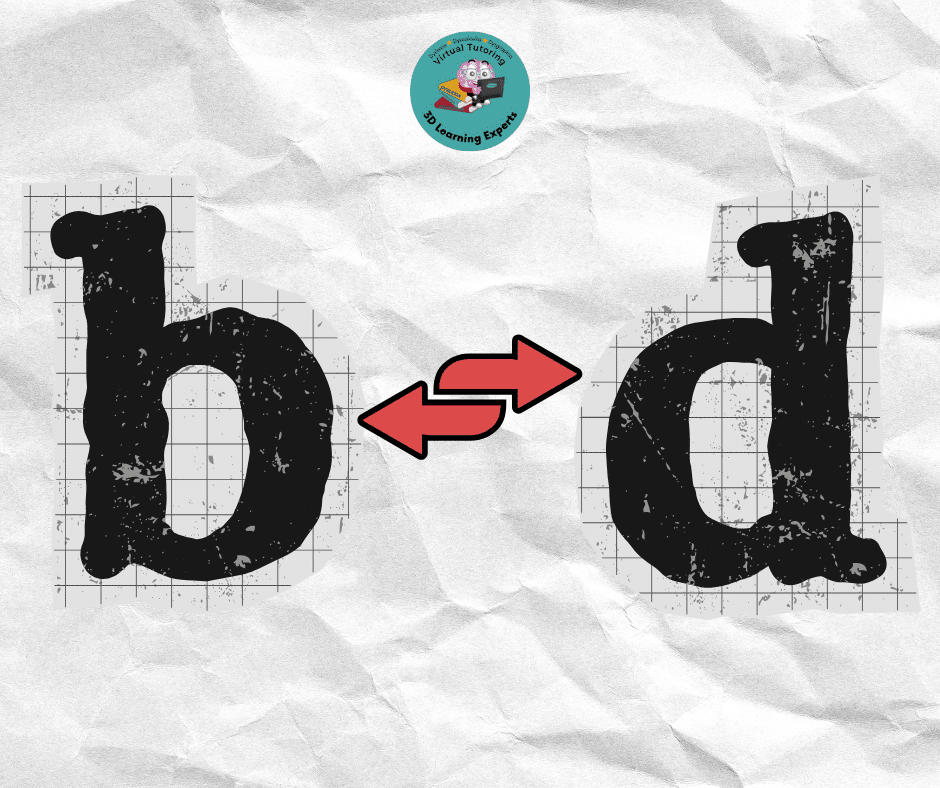
Letter reversals—writing letters or numbers backward—are a common concern for parents. A mom in our support group asked:
“I’ve noticed my daughter writing letters backward. At first, I thought it was normal, but then she started writing her name backward. When should we be concerned that this is more than just a phase?”
If your child reads sight words backward (like “new” as “wen” or “out” as “tuo”), you may wonder if they are showing signs of dyslexia. These concerns are valid, and early attention can make a huge difference in your child’s learning journey.
Why Do Letter Reversals Happen?
Letter reversals usually occur between ages 5 and 7. Many children outgrow them as their reading and writing skills improve. By age 8, most children can correctly orient confusing letters and numbers, such as b and d, p and q, or 2, 5, 6, 9.
According to ThoughtCo, letter reversals often stem from limited memory or prior exposure to letters rather than a serious learning problem. However, if your child has siblings with learning challenges or exhibits other signs of dyslexia, early intervention is recommended.
Pro Tip: Don’t wait to see if it goes away on its own. Early support can build confidence and prevent frustration.
Multi-Sensory Exercises to Reduce Letter Reversals
Research shows that multi-sensory approaches—using sight, touch, movement, and hearing simultaneously—are highly effective. This Reading Mama offers several strategies that can help your child:
- Focus on One Letter at a Time
- Teach only one letter or number until mastery before moving on. Avoid teaching confusing letters simultaneously.
- Mirror Writing
- Writing letters in front of a mirror while saying the sound aloud helps children see and hear differences between similar letters.
- Visual and Kinesthetic Cues
- Show letter formation in detail:
- b: starts with a straight line (the stick) and curves into a circle.
- d: starts with a circle at 2 o’clock and then adds a straight line.
- Use stories or hand motions: “Dog starts with d, and the tail is the stick,” or “Balloons start with b and go up.”
- Show letter formation in detail:
- Memory Links
- Use simple mnemonic devices like bed to remember letter order.
- Tracing and Sky-Writing
- Trace letters on paper with pictures or write letters in sand or salt to reinforce learning.
- Practice “sky-writing” to integrate motor memory.
Tip: Many of these strategies are included in our personalized tutoring programs at 3D Learning Experts, where we provide individualized lessons for children struggling with letter reversals and other dyslexia-related challenges.
What Science Says About Letter Reversals
A 2016 study published in Frontiers in Human Neuroscience found that letter reversals are not caused by phonological deficits. Instead, differences in visual processing can help identify children at risk for dyslexia early. Implementing visual and multi-sensory exercises, as described above, is highly effective in preventing learning difficulties from escalating.
How Parents and Teachers Can Help
Even though there is no “magic cure” for letter reversals, consistency and creativity work wonders:
- Develop habits using mental cues and stories for letters.
- Use connect-the-dot letters paired with pictures. For example, pair the letter d with a picture of a dog.
- Leverage natural features like freckles or hand dominance to orient letters.
- Introduce cursive writing when appropriate—it often reduces reversals naturally.
For parents seeking one-on-one support, our tutors at 3D Learning Experts specialize in dyslexia and letter reversal interventions to give children a strong foundation in reading and writing.
Key Takeaways
- Letter reversals are common in early learners but persistent reversals may indicate dyslexia or other learning differences.
Early, multi-sensory interventions are the most effective way to reduce letter reversals. - Memory aids, visual cues, and kinesthetic exercises help children master tricky letters and numbers.
- Partnering with expert tutors can provide customized support and boost your child’s confidence.