If you’re raising a child with Dyslexia, Dysgraphia, Dyscalculia, or any neurodiversity, you’ve probably asked yourself:
“What else can I do at home?”
I hear this question often.
Parents want to help. They want something they can do between tutoring sessions, after school, or over the summer that will truly make a difference.
Here’s the good news.
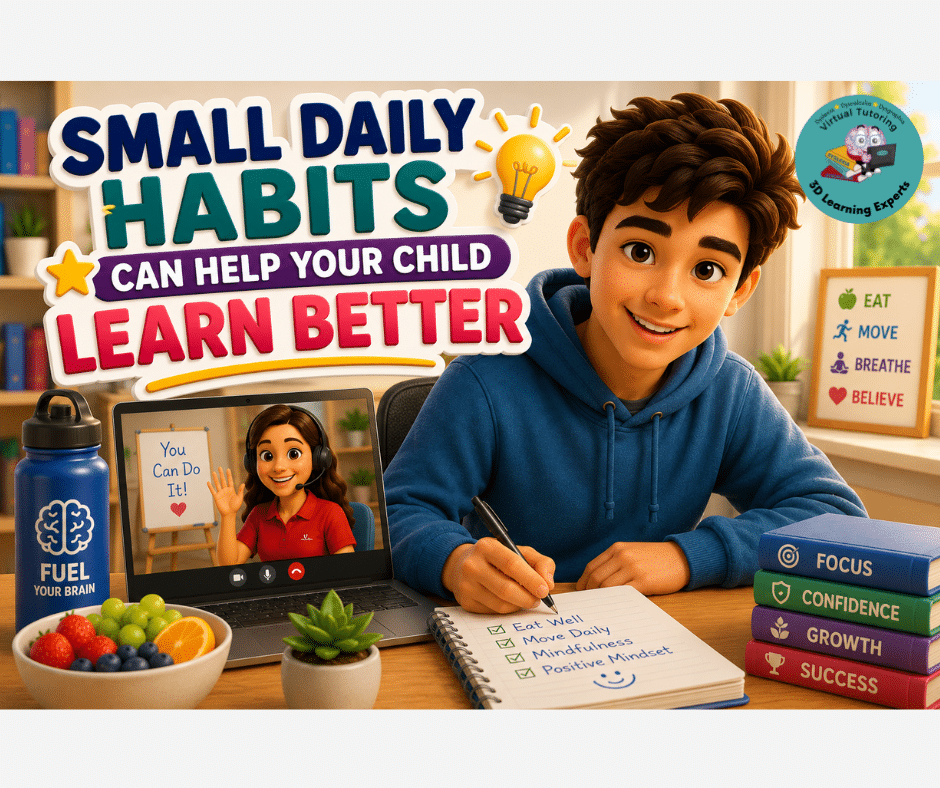
While no food, supplement, essential oil, or exercise program can “cure” a learning disability, healthy daily habits can absolutely support your child’s brain, attention, mood, energy, and confidence. Those things matter because a brain that is well rested, nourished, and regulated is more prepared to learn.
At 3D Learning Experts, we believe intervention should address the whole child, not just academics.
Help Your Child Learn Better With Healthy Foods
Our brains use about 20% of the body’s energy, even though they make up only a small percentage of our body weight.
That means what children eat can influence their ability to focus, regulate emotions, and stay energized throughout the day.
I encourage families to focus less on “perfect nutrition” and more on consistency.
Some brain-friendly foods include:
-
Fresh fruits and vegetables
-
Lean proteins
-
Eggs
-
Whole grains
-
Beans
-
Avocados
-
Fish rich in omega-3 fatty acids
-
Plenty of water
One of my favorite tips is involving your child in meal planning.
When kids help choose healthy foods, they’re much more likely to eat them.
The Centers for Disease Control and Prevention offers wonderful ideas for helping children develop healthy eating habits.
Help Your Child Learn Better Through Daily Exercise
You don’t need organized sports to help your child’s brain.
Movement increases blood flow to the brain, supports executive functioning, improves mood, and can even help children focus better.
Some simple ideas include:
-
Family walks
-
Bike rides
-
Swimming
-
Dance parties in the living room
-
Obstacle courses
-
Jump rope
-
Playing tag
-
Hiking
-
Backyard games
Even 20 to 30 minutes of movement before homework can make a noticeable difference for many children.
The American Academy of Pediatrics recommends helping children build daily movement into family life.
Help Your Child Learn Better by Limiting Screen Time
This one is hard, I know, but it is important.
Technology has become an integral part of everything: school, entertainment, and social life.
I’m not anti-screen.
I’m pro-balance.
Many parents tell me they notice their child struggles more after spending hours gaming or watching videos.
While every child is different, reducing recreational screen time often creates more opportunities for:
-
Better sleep
-
Reading together
-
Outdoor play
-
Family conversations
-
Creative activities
The CDC notes that limiting recreational screen time supports both physical and mental health in children.
Help Your Child Learn Better With Yoga and Mindfulness
Children with learning challenges often carry more stress than adults realize.
They work harder.
They compare themselves to classmates.
Sometimes they begin believing they aren’t smart.
That breaks my heart because I know exactly how that feels.
Simple yoga poses, breathing exercises, and short mindfulness activities can help children:
-
Reduce anxiety
-
Improve self regulation
-
Increase body awareness
-
Improve attention
-
Calm their nervous system
You don’t need an hour-long yoga class.
Even five minutes of deep breathing before homework can help reset a difficult day.
The nonprofit Action for Healthy Kids explains how yoga and mindfulness can improve children’s focus, self-regulation, confidence, and readiness to learn through simple, age-appropriate activities.
Help Your Child Learn Better With Meditation
Meditation doesn’t have to mean sitting perfectly still.
For children, meditation can simply mean learning how to pause.
Some easy ideas include:
-
Listening to calming music
-
Guided breathing
-
Gratitude exercises
-
Quiet visualization
-
Progressive muscle relaxation
Many families enjoy using age-appropriate guided meditations before bedtime.
Better sleep often leads to better learning the next day.
The Child Mind Institute offers practical articles about mindfulness, anxiety, and emotional regulation for ADHD youths.
What About Essential Oils?
I am a huge advocate of essential oils. When I had an in person tutoring center, we defused oils all the time.
While essential oils are not a treatment for learning disabilities, essentail oil helps create a calmer, more regulated environment for learning. The sense of smell is closely connected to the parts of the brain involved in memory and emotion, which is one reason certain scents may help some children feel more relaxed or focused. Research on essential oils for neurodivergent children is still emerging, so they should be viewed as a complementary tool rather than a replacement for evidence-based intervention.
Popular choices include:
-
Frankincense for creating a calm environment during learning activities
-
Vetiver for encouraging a grounded, calming atmosphere
-
Sweet Orange or Mandarin for an uplifting, cheerful mood
-
Cedarwood as part of a relaxing evening routine
-
Lavender for promoting relaxation and supporting bedtime routines
Look for high-quality, pure oils, use them only as directed, and always dilute them properly before applying them to the skin. Diffusing oils can be a good option for many families, although children with asthma, allergies, or heightened sensory sensitivities may not tolerate them well. Every child is different, so it’s important to pay attention to how your child responds. A scent that is calming for one child may be overwhelming for another, especially for children with sensory sensitivities.
Help Your Child Learn Better With Positive Reinforcement
This may be the most powerful strategy of all.
Children with learning disabilities hear far too many corrections every day.
Imagine spending all day feeling like you’re not enough.
Now imagine coming home and hearing only what you did wrong.
Instead, try noticing effort before results.
Say things like:
-
“I noticed how hard you worked.”
-
“You didn’t give up.”
-
“I’m proud of your perseverance.”
-
“You kept trying even when it was difficult.”
Confidence grows when children experience success.
Success builds motivation.
Motivation fuels learning.
Structured Intervention Still Matters
Healthy habits support learning.
They do not replace specialized instruction.
A child with Dyslexia still needs structured literacy.
A child with Dyscalculia still needs explicit math intervention.
A child with Dysgraphia still needs direct instruction in writing.
Think of healthy habits as preparing the soil.
Specialized intervention is what helps the seeds grow.
At 3D Learning Experts, we combine evidence-based, multisensory instruction with encouragement, confidence building, and individualized support because every child deserves to feel successful.
If you’re wondering whether your child would benefit from specialized intervention, schedule a free consultation . You can also explore more parent resources on our website, including articles about summer learning, choosing the right Dyslexia tutoring, and helping children build confidence through structured instruction.
Final Thoughts
As a mom who has walked this journey personally, I know how easy it is to feel like you should be doing more.
The truth is, you don’t have to do everything.
Start with one healthy habit.
Take one family walk.
Read one extra book together.
Cook one healthy meal.
Practice five minutes of breathing.
Celebrate one small victory.
Those little moments add up.
And sometimes, the smallest changes create the biggest breakthroughs.