Multisensory Math: What It Looks Like for Students With Dyscalculia
Multisensory math is not a trend. It’s not a buzzword. And for students with Dyscalculia, it’s often the difference between lifelong frustration and real understanding.
I’ve worked with too many children who were told to just practice more, as if repetition alone could rewire how their brain processes numbers. It does not. And that is where multisensory math changes everything.
At 3D Learning Experts, our instructors do not just teach math. We rebuild it using touch, movement, visuals, and language so students can finally experience math in a way that makes sense.
Why Multisensory Math Works When Traditional Math Fails
Traditional math instruction assumes that students can move straight from numbers on a page to abstract thinking. But students with dyscalculia often struggle with:
-
Number sense
-
Working memory
-
Visualizing quantities
-
Retaining math facts
That is why worksheets alone do not work.
Multisensory math slows the process down intentionally and builds it back up through structured, meaningful experiences.
Encouragement is important. But let’s be honest.
Confidence does not come from praise. It comes from success.
And success comes from understanding.
For a deeper look at how dyscalculia impacts learning, you can explore this research from the Child Mind Institute.
The Concrete, Representational, Abstract Progression in Multisensory Math
This is the backbone of multisensory math instruction.
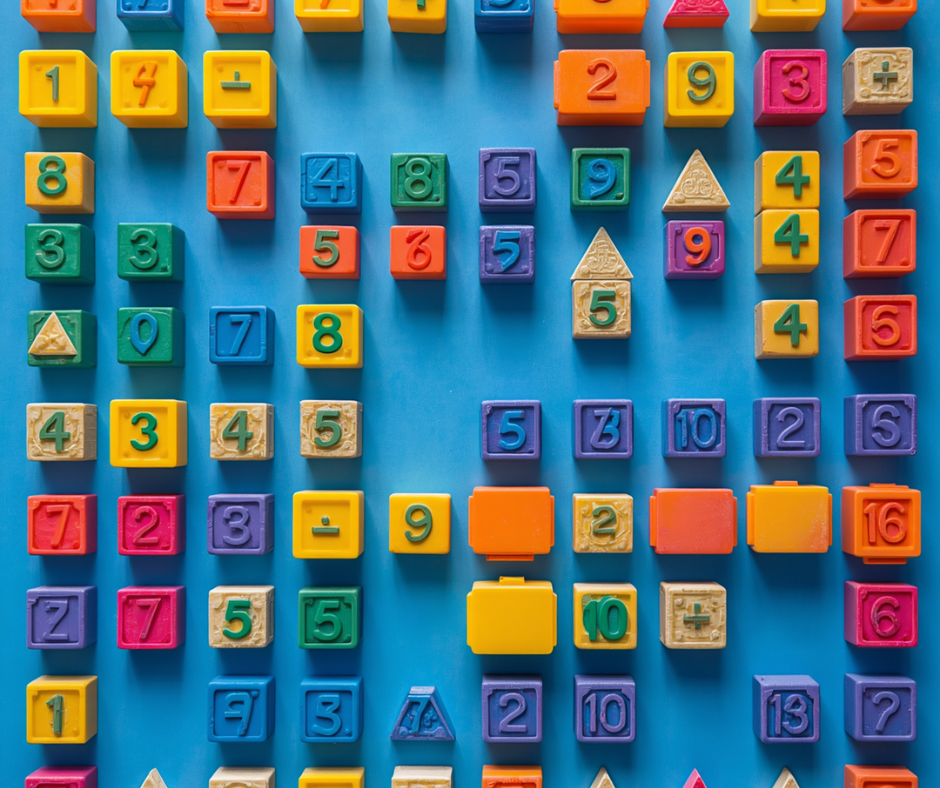
1. Concrete Hands On Learning
Students physically touch and manipulate math.
-
Counters
-
Blocks
-
Fingers
-
Real life objects
This is where math becomes real, not symbolic.
2. Representational Visual Models
Students begin to see math.
-
Drawings
-
Number lines
-
Visual fraction models
-
Diagrams
3. Abstract Numbers and Symbols
Only after understanding is built do we move to:
-
Equations
-
Algorithms
-
Mental math
Skipping steps here is exactly why so many students struggle.
Touch Point Math: Multisensory Math for Addition and Subtraction
One of the tools we use inside multisensory math is Touch Point Math, a method I created to help students feel numbers.
Each number has specific touch points. Students physically tap and count.
Instead of guessing or memorizing:
-
They experience addition and subtraction
-
They build rhythm and consistency
-
They reduce cognitive overload
For a student who once saw numbers as meaningless symbols, this changes everything.
Times Tales Stories: Multisensory Math for Multiplication and Division
Memorizing multiplication facts is one of the biggest roadblocks for students with dyscalculia.
So we do not rely on memorization alone.
We use Times Tales, a story based approach that connects numbers to characters and events.
Why it works:
-
Stories improve memory retention
-
Students create emotional connections
-
Abstract facts become meaningful
Multiplication stops being random and starts making sense.
How Multisensory Math Helped Me Finally Understand Fractions
I am going to say something most educators will not admit.
I did not truly understand fractions until I was in my 30s.
Not in school. Not in college.
It happened while I was homeschooling my children and watching a math video that visually demonstrated fractions.
For the first time, I saw:
-
What 1/2 actually looked like
-
How parts relate to a whole
-
Why fractions behave the way they do
And I remember thinking, why was I not taught this way?
That moment shaped everything about how I teach today.
Because if a grown adult can miss this foundational concept, imagine what our children are experiencing.
Visual Models in Multisensory Math: The Missing Link
Visual models are not optional. They are essential in multisensory math.
We use:
-
Fraction circles
-
Area models
-
Number lines
-
Bar models
These tools help students see relationships, not just compute answers.
And when students can visualize math, their anxiety decreases because math finally becomes predictable.
Language Based Multisensory Math Instruction
Math has its own language, and many students with dyscalculia were never taught how to speak it.
We explicitly teach:
-
Vocabulary such as sum, difference, product, quotient
-
Sentence structure in math problems
-
How to explain thinking out loud
When students can talk through math, they understand it at a deeper level.
How Progress Is Measured in Multisensory Math
Let’s be clear. Progress is not just about speed or test scores.
At 3D Learning Experts, we measure multisensory math progress by:
-
Accuracy before speed
-
Strategy use, not guessing
-
Ability to explain reasoning
-
Reduced math anxiety
-
Retention over time
Because real learning sticks.
What Multisensory Math Really Means for Your Child
Multisensory math means your child:
-
Stops relying on memorization alone
-
Builds true number sense
-
Gains independence in problem solving
-
Develops confidence through understanding
And most importantly, they finally feel capable.
A Quiet Truth About Multisensory Math Programs
Not all math help is created equal.
If a program skips:
-
Hands on learning
-
Visual models
-
Structured progression
It is not true multisensory math, and it is not designed for students with dyscalculia.
At 3D Learning Experts, multisensory math is not an add on.
It is the foundation.
A Gentle Next Step
If your child is struggling with math and traditional tutoring has not worked, it may not be your child.
It may be the approach.
You can learn more here:
Tutoring vs. Intervention: What’s the Difference and Why It Matters
Why Confidence Follows Skill, Not the Other Way Around
Or reach out to 3D Learning Experts to see if multisensory math is the right fit for your child.