Understanding Twice-Exceptional (2e) Kids with Dyslexia: Supporting Their Bright Minds and Unique Challenges
As we celebrate National Parenting Gifted Children Week, I want to shine a light on a group of students who are often misunderstood and underserved—twice-exceptional learners. As the CEO of 3D Learning Experts and someone who lives with Dyslexia, and has raised and taught many gifted students with learning difficulties, I deeply understand the challenging road these kids travel.
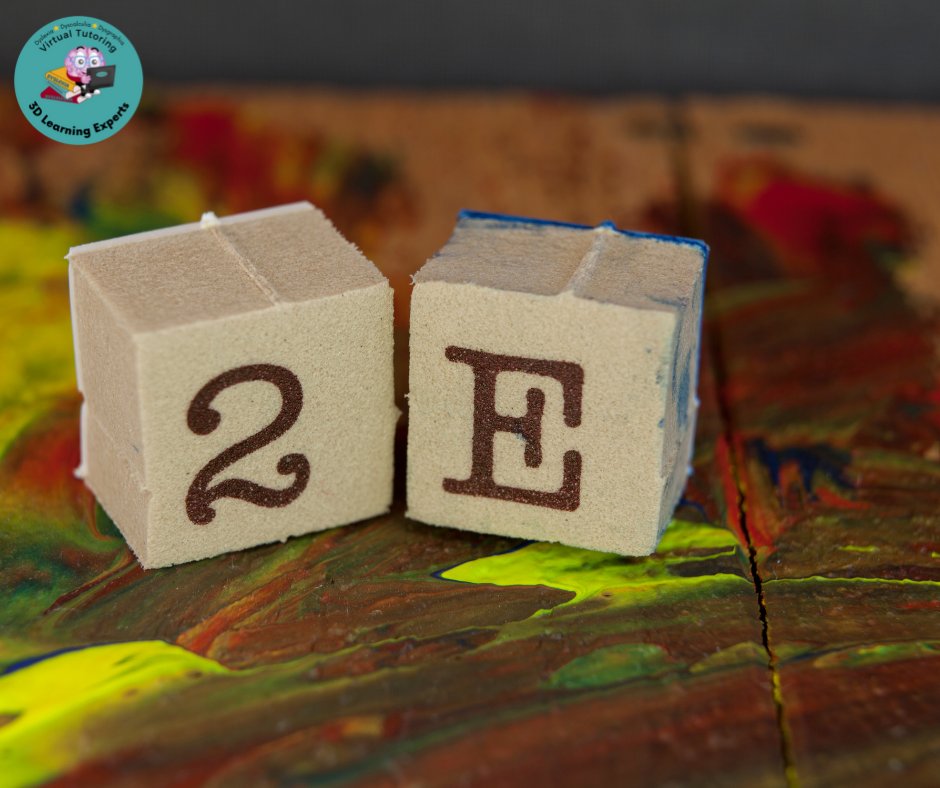
If you’re unfamiliar with the term, twice-exceptional, often referred to as 2e, relates to individuals who are both gifted and have a learning challenge, such as Dyslexia, Dysgraphia, or Dyscalculia. These are the kids who may have an exceptionally high IQ, incredible creativity, or deep insight well beyond their years and struggle with basic academic tasks like reading, spelling, or writing.
The Hidden Frustration of 2e Students with Dyslexia
Imagine knowing you’re smarter than most of your classmates because your thoughts are faster, your ideas are deeper, and your curiosity is endless. Then imagine getting stuck on sounding out the word ‘elephant’ or spelling ‘because’ or ‘pretty’. This is the internal conflict many 2e kids experience daily.
We’ve worked with countless 2e students at 3D Learning Experts who feel like their brains are at war with themselves. They see patterns others miss, think outside the box, and crave intellectual stimulation, yet reading aloud in class or turning in a legible essay can trigger meltdowns, avoidance, or shame.
Some of these kids can mask their Dyslexia so well that their struggles go unnoticed for years. Others act out or shut down completely because they can’t reconcile how someone “so smart” can have such difficulty with what seem like “simple” tasks.
✨ Related: What Is Dyslexia and How Can You Support Your Child?
✨ Related: Is My Gifted Child Actually Twice-Exceptional?
Common Myths About 2e Learners
Let’s bust three myths that persist:
- Myth #1: Gifted kids will do fine on their own.
Truth: 2e learners often need more support, not less. - Myth #2: Struggling with reading or spelling means they aren’t really gifted.
Truth: Intelligence and learning disabilities can absolutely coexist. - Myth #3: They’re just lazy or not trying hard enough.
Truth: Many 2e students are working twice as hard to keep up, which is exhausting.
What Parents Can Do for Their 2e Kids
If you’re parenting a twice-exceptional child, you are not alone. Here are a few ways to help your gifted child thrive:
- Normalize the challenge. Talk openly about Dyslexia and remind them that struggling with reading doesn’t make them any less smart.
- Celebrate their strengths. Whether it’s music, storytelling, coding, or inventing—make sure they feel successful in something that brings them joy.
- Use tools that support independence. Text-to-speech, audiobooks, mind-mapping software, and assistive spelling apps can be game-changers.
- Advocate at school. Request accommodations through an IEP or 504 Plan that match their learning profile.
- Consider personalized tutoring. Our virtual tutoring program is designed with 2e learners in mind—respecting their intellect while working through their learning challenges at their pace.
- Join a support group: There are many online and in person support groups for 2e families to participate in together. This is highly beneficial for both students and parents to spend time with other families living similar experiences.
Being both gifted and Dyslexic is often a misunderstood experience. However, with the right support system, these students can go from frustrated and overlooked to empowered and unstoppable. During this National Parenting Gifted Children Week, I encourage every parent to take a moment to truly see their 2e child, not just for the struggles they face, but for the incredible potential they hold.
If you suspect your child might be 2e, or you’re looking for personalized support, reach out. At 3D Learning Experts, we’re here to guide you—and your child—on a path to success.